
Wire Harnesses
Complex Wire Harness Assemblies
Complex harnesses combine several branches, termination types, labels, and protective materials in one assembly. MTTJ cuts and prepares the wires, crimps or solders the specified terminals, lays out the harness, adds protection, and checks circuits and identification against the drawing.
Send Project Details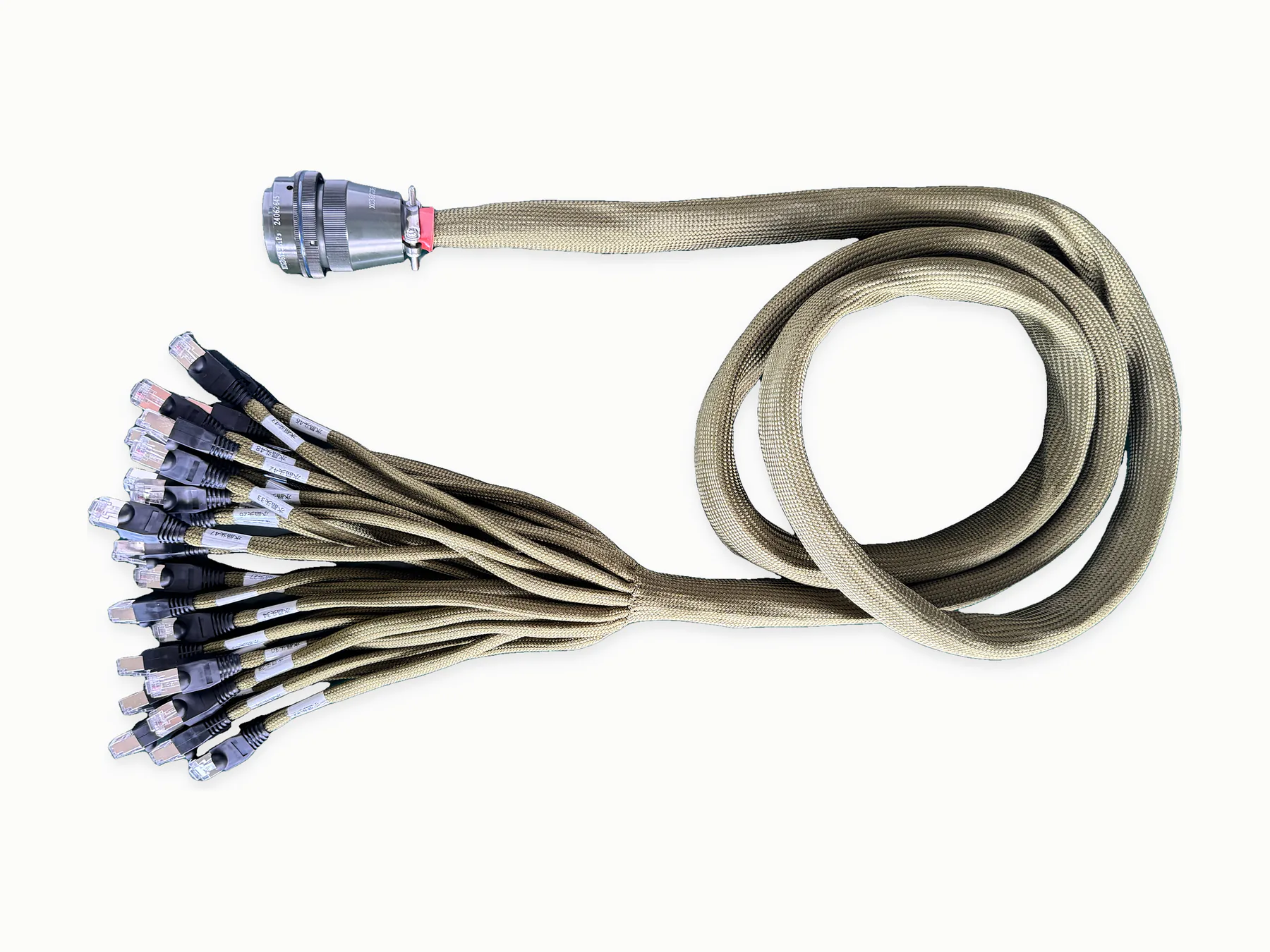
Multi-branch harness with connectorized ends
The harness has a circular connector, several branches, prepared leads, and routing protection. Branch length and identification are set by the layout.
Branched wiring inside equipment
- Industrial automation and robotics
- Elevators and rail transit equipment
- Heavy equipment and machinery
- Home and kitchen appliances
- OEM equipment subassemblies
Branches, labels, sleeving, terminations
- Point-to-point harnesses
- Branched harnesses
- Sleeving, ties, tape wrap, and routing features
- Labels and wire markers
- Connectorized harness ends
Wire, terminals, connectors, protection
- Specified wire
- Sleeving
- Cable ties
- Heat shrink
- Connector housings and terminals
Harness layout
Branch dimensions, BOM set assembly
The drawing should show branch lengths, connector and terminal part numbers, wire identification, protection, tie points, and test points.
| Harness drawing | Routing, branch lengths, terminations, labels, and inspection points come from the harness drawing. |
|---|---|
| Connector system | Connector and terminal part numbers set the mating and crimping work. |
| Wire identification | Labels, colors, markers, or document references should match the drawing revision. |
| Routing protection | Sleeving, heat shrink, tape wrap, tie points, and bend control protect the harness in the equipment. |
| Testing | Continuity, polarity, and functional checks follow the harness design and fixture method. |
Examples
Product and process examples
These images show visible assembly features. Quotation and production planning follow the supplied drawing, materials, tests, and record requirements.
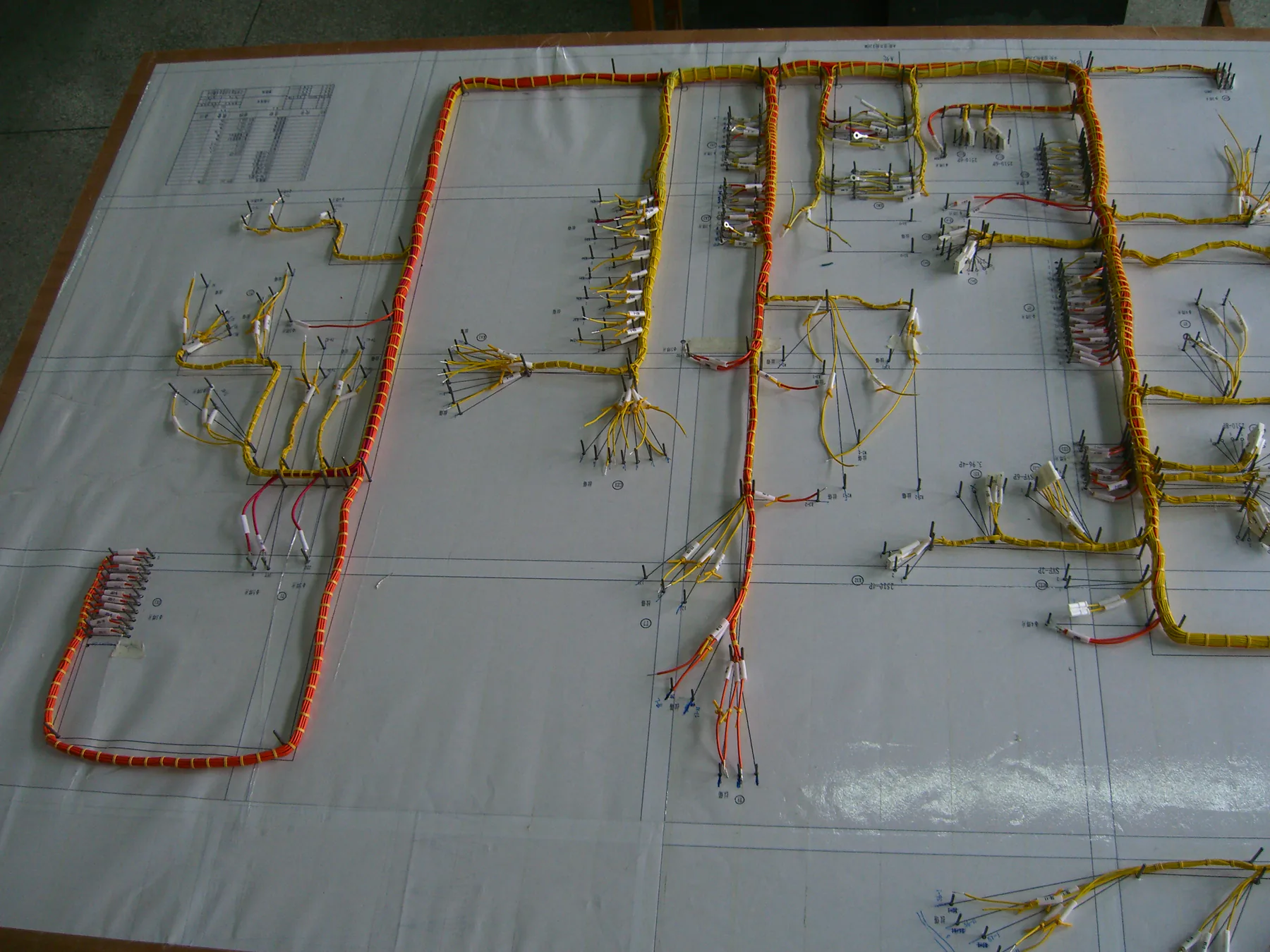
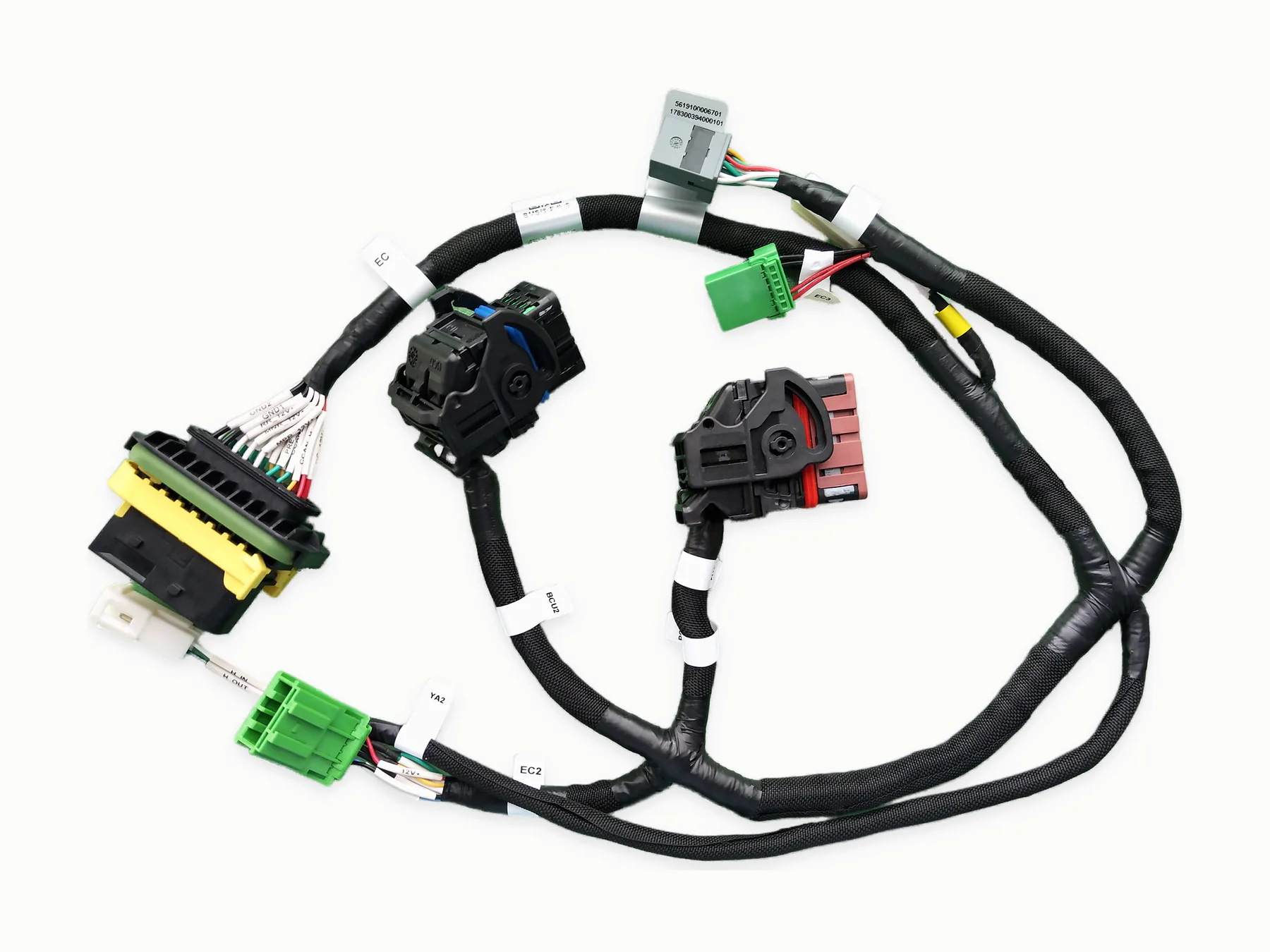
Wire preparation, layout, termination, protection
- 1Wire cutting
- 2Wire stripping
- 3Terminal crimping
- 4Soldering
- 5Automatic cut-strip-crimp
- 6Automatic tape wrapping
- 7Single-core wire twisting
- 8Electrical testing
Circuits, branch dimensions, labels, fit
- Fixture or table-based continuity and polarity checks follow the harness drawing and pinout.
- Inspect branch lengths, routing protection, labels, wire markers, and connector seating against the layout.
- Run pull-force, hi-pot, functional, or requested inspection checks when terminal data and pass limits are supplied.
Large layouts, fixtures, no-substitution parts
Vehicle, rail, heavy equipment, or outdoor operating environments
Specified connector brands or components
High-voltage, high-current, or specified inspection standards
Harness board or layout fixture needs when branch routing must stay repeatable
Qualified-supplier coordination
- Horizontally injection-molded housings requiring horizontal molding machines
- PCB assemblies / circuit boards
- Specified plug, connector, or component sourcing
For quotation
Use one harness drawing and BOM as the baseline
- Harness drawing, BOM, branch lengths, and routing protection
- Connector and terminal part numbers with wire type, gauge, and labels
- Fixture, continuity, pull-force, functional, or final inspection method
- Photos or marked views of routing areas when installation space affects branches
Related routes
Continue with the closest product, capability, industry, or guide
Request a quote
Send harness drawings, BOM
Mark branch lengths, connector and terminal part numbers, labels, protection, and the circuit test to be used.