Design & Materials
Coiled Cord Recovery and Flex Requirements
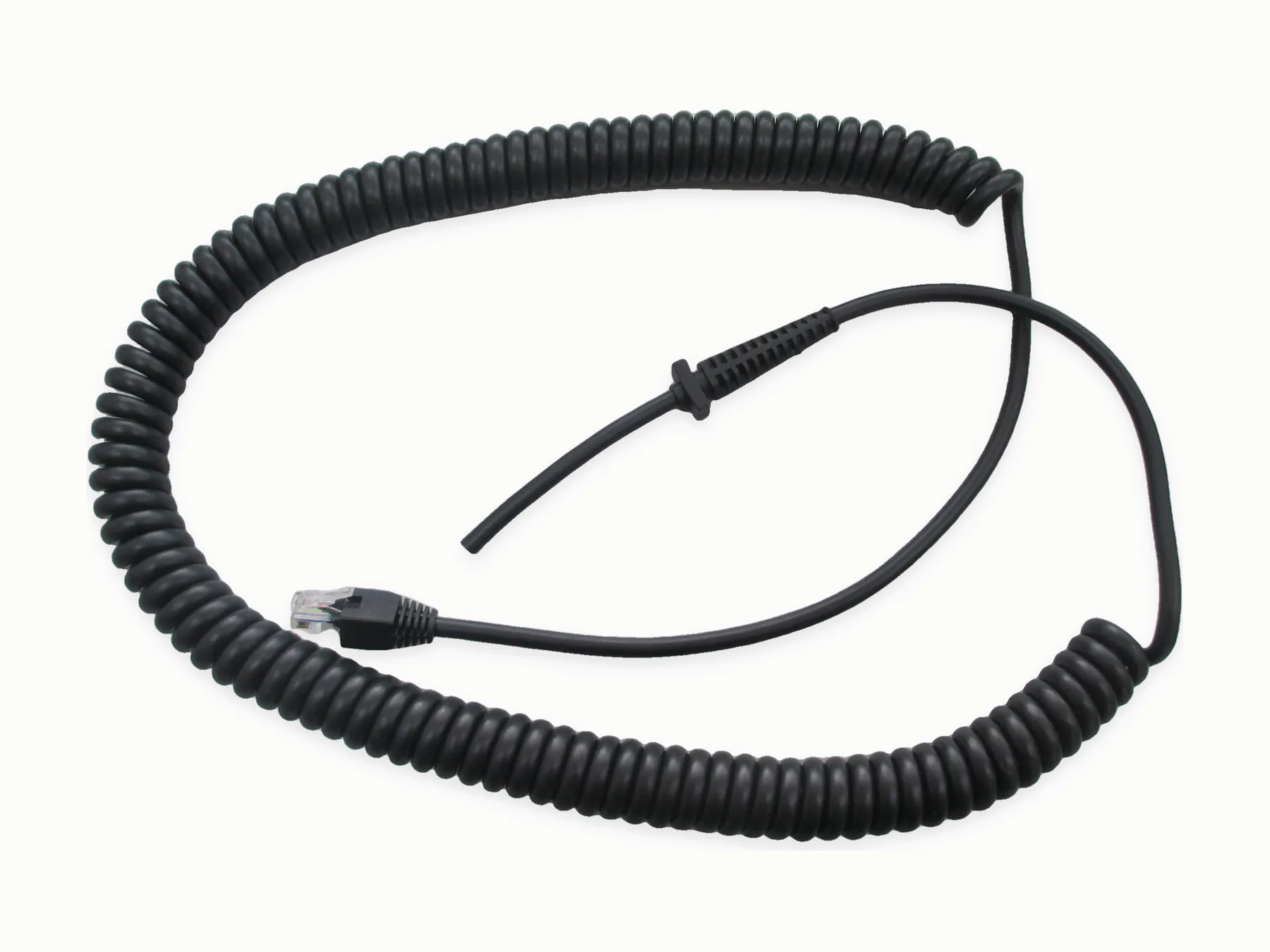
Coiled cord performance depends on relaxed length, working reach, coil OD, cable construction, tail length, connector ends, jacket behavior, flexing, and the specified recovery test. Define the test before judging the sample.
Prepared by MTTJPublished: Updated:
Decision summary
What to carry into the decision
- Recovery, repeated flex, and working extension are separate behaviors and need separate methods.
- Condition the sample and record the measurement timing before judging the relaxed form.
- Include connector tails and the transition into the coil because failures may begin outside the visible coil body.
Direct answer
Define relaxed coil length, extended working reach, coil OD, cable OD, straight-tail length, connector ends, flex profile, and recovery test method in the RFQ. Recovery should be judged against a named method and limit.
Recovery inputs
Coiled cord requirements should describe both geometry and use behavior.
| Geometry | Relaxed length, working reach, coil OD, cable OD, tail lengths, and connector orientation. |
|---|---|
| Cable | Conductor count, wire gauge, jacket material, shielding, and mixed power/signal needs. |
| Use | Pull distance, repeated motion, temperature, oil, UV, cleaning, and routing environment. |
| Verification | Extension, recovery, continuity, polarity, visual, and packing checks with pass/fail limits. |
RFQ checklist
Send these details with a coiled-cord request.
- Drawing or marked sample showing relaxed length, working reach, coil OD, and tail lengths.
- Cable construction, conductor count, wire gauge, connector ends, pinout, and overmolding needs.
- Recovery, flex, repeated-motion, temperature, and environmental test criteria when required.
- Quantity, packing, label, record, and destination requirements.
Define recovery and durability
Specify relaxed and extended dimensions, recovery method, flex or durability method when required, and acceptance limits for the quoted cord.
Movement test matrix
Give each behavior its own sequence and result.
| Working extension | Direction, distance, force or operating condition, hold time, and usable reach. |
|---|---|
| Recovery | Conditioning, release, rest time, measurement points, and relaxed-length limit. |
| Repeated flex | Bend location, radius, angle, load, rate, cycles, environment, and stop condition. |
| Post‑check | Continuity or polarity, jacket and coil appearance, connector condition, and dimensional result. |
Avoid undefined durability language
Words such as flexible, retractable, or long life do not state a test. Describe the equipment motion and provide a sequence with measurable limits so cable construction and inspection can be discussed against the same target.