Design & Materials
Coiled Cord RFQ Specification
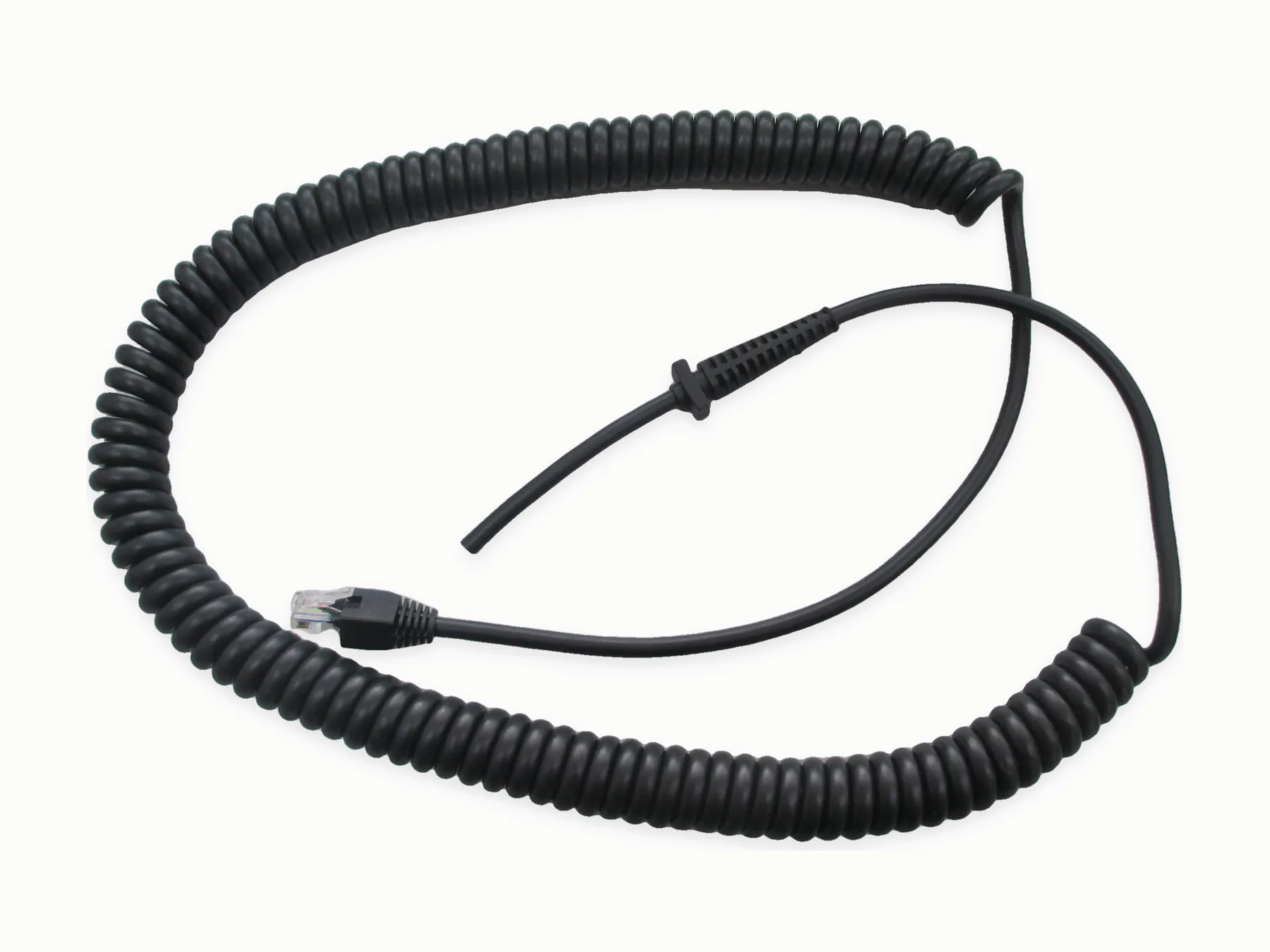
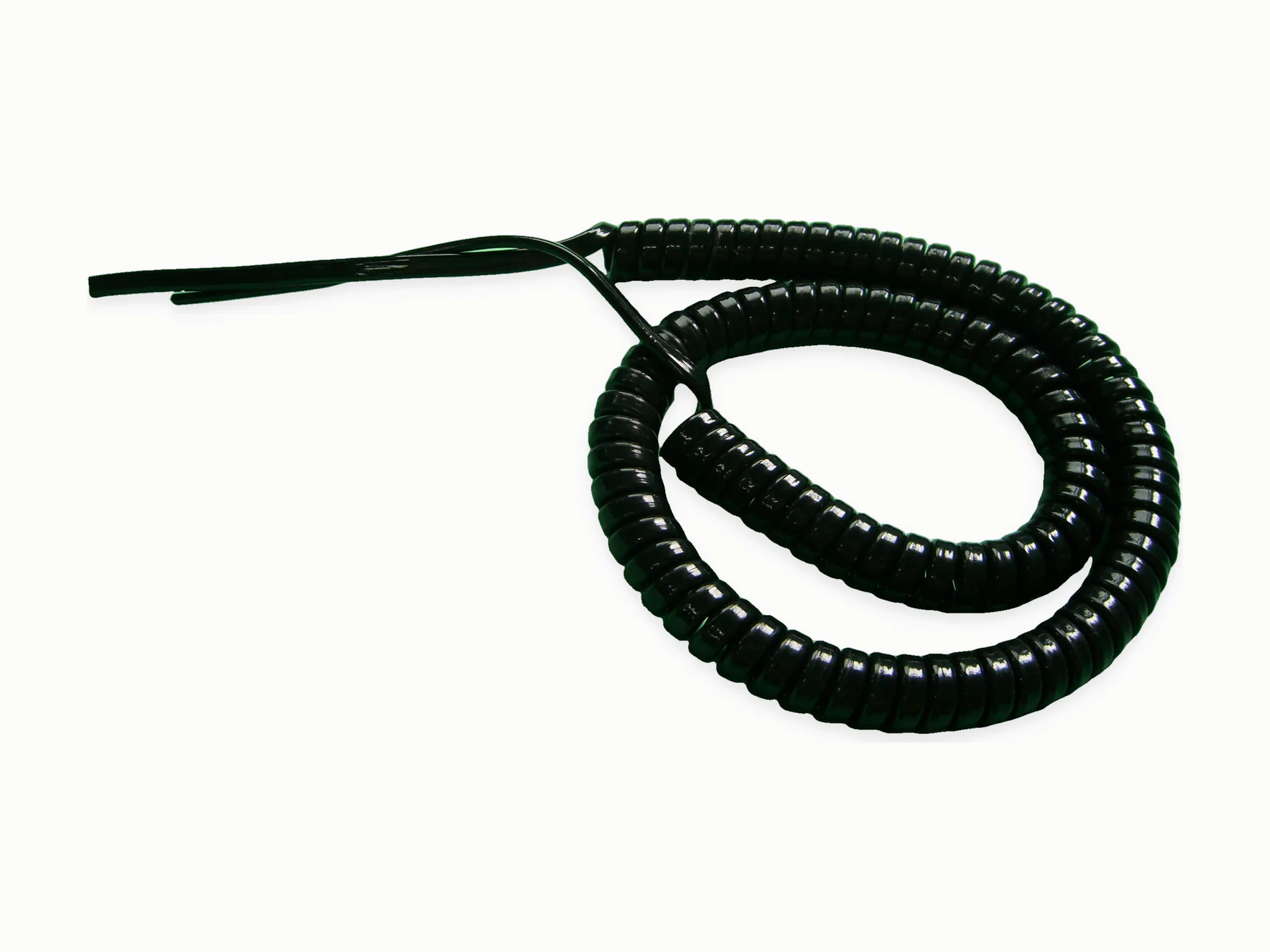
Coiled-cord drawings should separate relaxed coil length from working reach. Coil diameter, cable construction, tail lengths, connector ends, flex expectations, and packing then complete the build definition.
Prepared by MTTJPublished: Updated:
Decision summary
What to carry into the decision
- Specify relaxed coil length and usable working reach as different dimensions.
- Record coil outside diameter, cable outside diameter, straight-tail lengths, and connector orientation.
- Define recovery and repeated-motion checks with a conditioning sequence and acceptance limit.
Separate relaxed and working dimensions
Retracted length describes the relaxed coil. Extended working length describes the reach needed in use. Both are needed before MTTJ can judge coil geometry.
Also provide coil outer diameter, cable outside diameter, straight-tail length, and end-to-end cable length when those values are already known.
If a reference sample exists, identify whether the sample shows the target relaxed shape, the working reach, or only a starting point for discussion.
Settle cable and connector requirements
List conductor count, wire gauge, cable type, jacket material, connector part numbers, pinout, and whether either end needs overmolding.
If the cable carries mixed power, signal, data, or control functions, show that clearly in the drawing or schematic.
State flexing and environment expectations
Repeated-flex expectations, temperature range, outdoor or UV exposure, cleaning, oil, moisture, and handling conditions should be included if they matter to the application.
Keep the required test method separate from general use notes so forming, connector assembly, inspection, and packing use the same drawing package.
Testing and inspection requirements
A coiled cord RFQ should specify both the relaxed geometry and the working reach, along with cable construction, connector, flexing, testing, and packaging requirements.
For quotation, separate the required test method from general use notes so MTTJ can align forming, connector assembly, inspection, and packing.
Coiled-cord specification table
Use one unit system and identify the measurement condition for every dimension.
| Relaxed form | Relaxed coil length, coil outside diameter, pitch or spacing, and allowed shape variation. |
|---|---|
| Working movement | Usable reach, extension path, frequency, pull direction, and any twisting. |
| End configuration | Straight-tail lengths, connector part numbers, orientation, pinout, and strain relief. |
| Verification | Recovery, flex, continuity, polarity, appearance, and final packing method. |
Keep geometry and behavior separate
A cord can match its relaxed dimensions yet behave differently when extended, routed, or stored. Quote geometry and motion criteria as separate lines so material and forming decisions are not hidden inside one broad durability request.